Advertising is the art and science of promoting products, services, or ideas to a target audience using paid channels. It’s how brands capture attention, communicate value, and drive actions — from clicks and leads to store visits and sales.
What is Advertising?
Why Is Advertising Important in the future?.
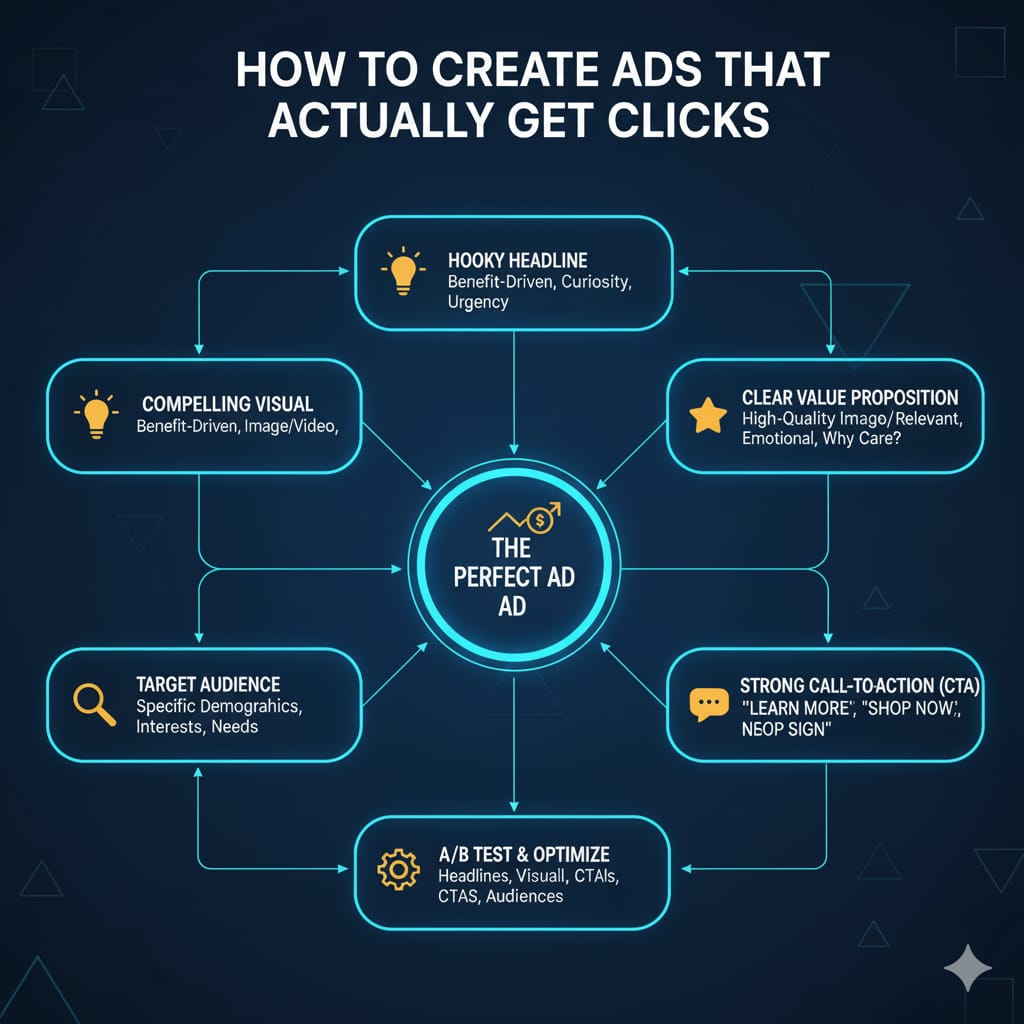
How to Create Ads That Actually Get Clicks
Offline vs. Online Advertising — Which One Works Best?
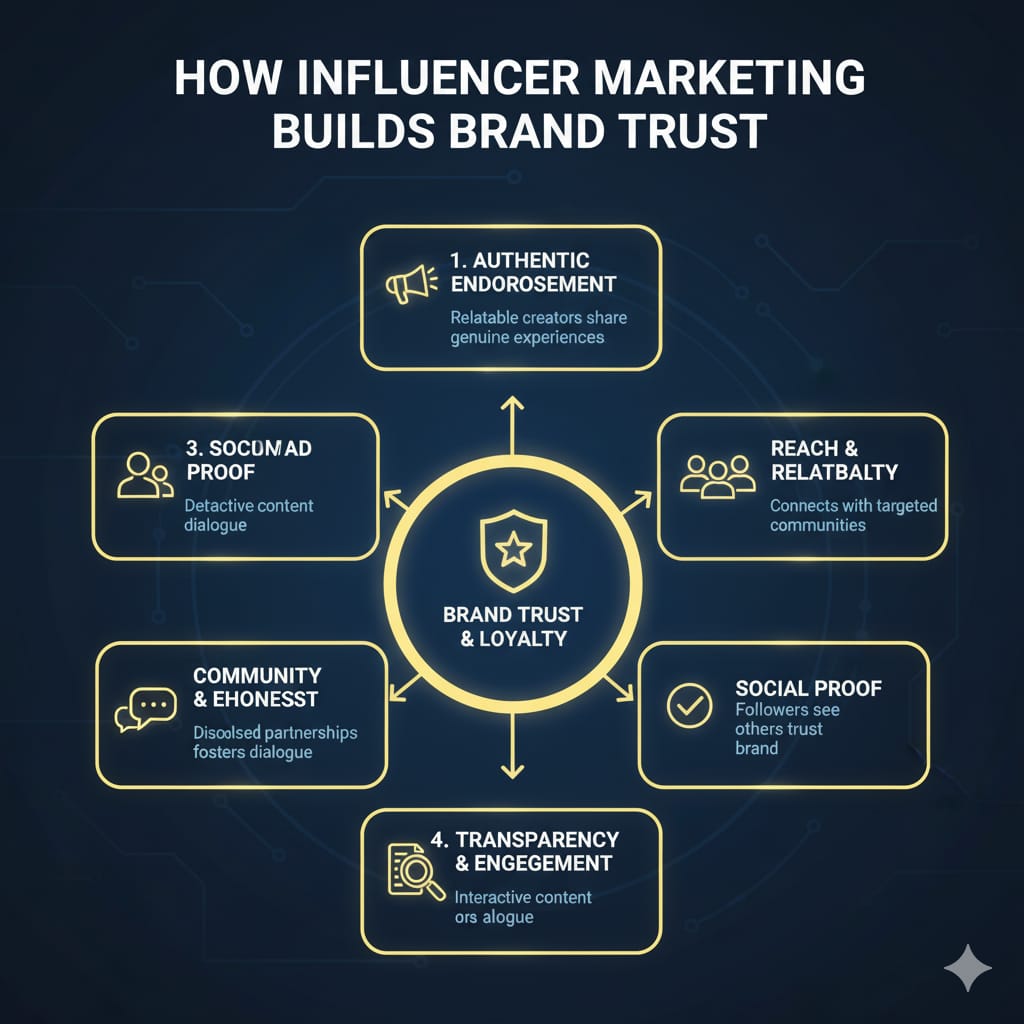
How Influencer Marketing Builds Brand Trust
Advertising is a form of paid communication used by businesses, brands, or individuals to promote products, services, or ideas to a specific target audience.
What is Advertising?
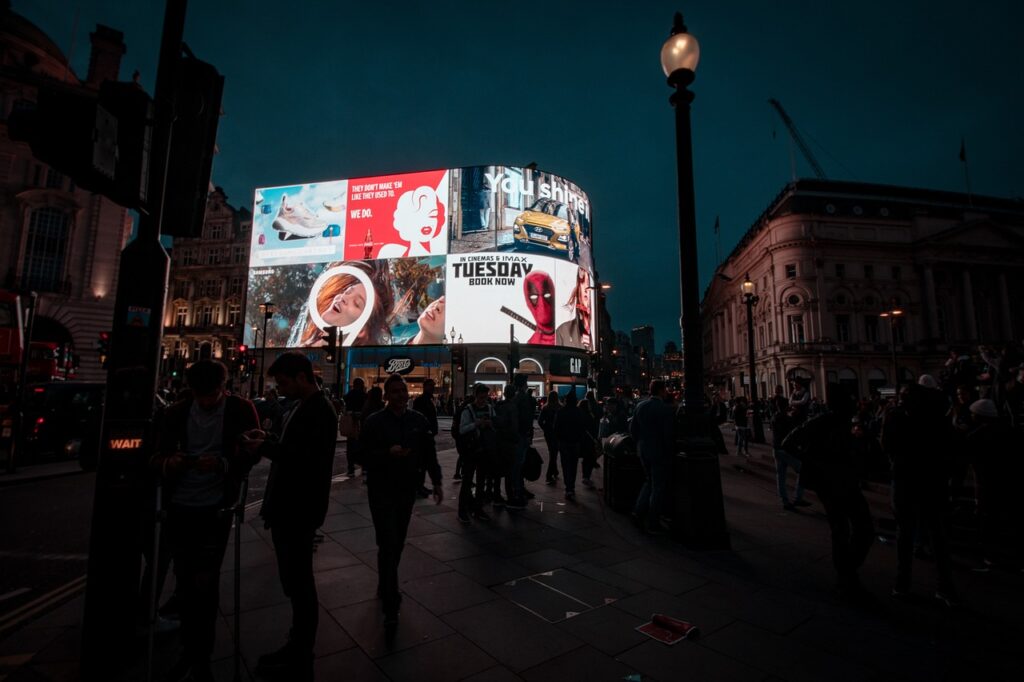
Advertising is any paid, public communication used by a brand to inform, persuade, or remind an audience about products, services, or a brand idea. It spans many formats — search ads, social ads, display banners, video ads, radio, print, outdoor (OOH), TV, influencer partnerships, and more. Advertising’s core promise: deliver a persuasive message at scale to influence behavior.
Advertising will continue to play a crucial role in the future because it connects businesses with the right audience in a fast-changing digital world. Here’s why it’s becoming even more important 👇
1️⃣ Growing Online Competition
As more businesses move online, advertising helps brands stand out in crowded markets. Without effective ads, even great products can remain unseen.
2️⃣ Technology & AI Integration
Future advertising will use AI, data analytics, and personalization to reach the right people with the right message at the right time — improving engagement and conversions.
3️⃣ Expanding Digital Platforms
New platforms like metaverse ads, AR/VR experiences, and influencer collaborations will give brands more creative ways to communicate and connect emotionally with customers.
4️⃣ Consumer Behavior is Changing
Modern consumers research online before buying. Future advertising will be vital for building trust, storytelling, and brand identity across multiple channels like social media, video, and search.
5️⃣ Data-Driven Decision Making
With advanced analytics, advertisers can track performance, measure ROI, and optimize campaigns faster than ever — making advertising smarter and more efficient.
6️⃣ Supports Innovation and Growth
Advertising fuels economic and brand growth. It helps new startups compete, encourages innovation, and keeps markets dynamic by introducing people to fresh ideas and solutions.
.
Case Context
Many ads get impressions but fail to convert — leading to wasted spend. Clickable ads are about matching audience intent, delivering a clear value proposition, and reducing friction to the next step.
Who this is for
Performance marketers, e-commerce owners, small businesses, startup founders, designers and copywriters.
A. Core Principles (Why some ads click and others don’t)
Relevance: The ad must match the user’s intent and context.
Clarity: Clear, obvious value proposition in the first glance.
Visual arrest: A creative that stands out in the feed or SERP.
Single action: One clear CTA — don’t confuse the user.
Speed & alignment: Landing page must match the ad and load fast.
B. Step-by-step Process
1. Audience & intent first
Segment into: cold (awareness), warm (consideration), hot (conversion).
Use intent signals: search keywords for Google; engagement/interest for social.
Build separate creatives for each stage.
2. Define a compelling offer
Ask: “Why should they click now?”
Offers: discounts, free trial, downloadable asset, webinar, limited stock.
Make the offer quantifiable: “Get 20% off — today only.”
3. Craft attention-grabbing creative
Visuals: high-contrast, clear focal point (faces with eye contact, product in use).
Video: hook in first 1–3 seconds; keep message concise.
Thumbnail: for video or display, show the benefit at-a-glance.
4. Write a persuasive headline and primary text
Headline = immediate benefit (use numbers when possible).
Primary text = short context + single CTA.
Use emotional triggers (curiosity, urgency, exclusivity, social proof).
5. One clear CTA
Avoid multiple CTAs. Choose “Buy Now”, “Book Free Call”, “Download”, or “Learn More”.
Match CTA wording on ad and landing page.
6. Landing page alignment
Same hero message, same image or visual language, same offer.
Remove distractions: limit navigation, minimize form fields (name + email), show trust signals (testimonials, secure badge).
Aim for <3-second load time on mobile.
7. Add social proof & urgency
Include short testimonials, star rating, number of customers, or time-limited countdowns.
Use scarcity (limited stock) responsibly — it must be true.
8. Test & iterate (A/B testing)
Test 2 visuals × 2 headlines × 2 CTAs.
Run tests long enough to gather meaningful data (statistical significance depends on volume).
Monitor CTR, conversion rate, CPA, and ROAS — don’t optimize CTR alone.
C. Platform-specific tips
Google Search: include keyword in headline, use ad extensions (sitelinks, callouts, structured snippets).
Facebook/Instagram: strong primary image/video, short copy above the fold, leverage carousel to show multiple benefits.
YouTube: non-skippable first 5 seconds or an unignorable hook for skippable ads; end screen CTA.
Display/Programmatic: context + creative refresh; use dynamic creative optimization (DCO).
D. Measurement: KPIs to track
CTR (click-through rate) — creative relevance indicator.
CPC / CPM — cost efficiency.
Conversion Rate — landing page effectiveness.
CPA (cost per acquisition) — business-centric metric.
ROAS (return on ad spend) — revenue per ad rupee/dollar.
LTV:CAC — customer lifetime value to acquisition cost ratio.
E. Quick Checklist Before Launch
Targeting segments defined ✔
Offer clear and time-bound ✔
Visual & headline tested ✔
Landing page aligned & fast ✔
Tracking & pixels installed ✔
2–3 creatives ready for testing ✔
Conclusion
Ads that get clicks are the result of alignment: right audience, irresistible offer, standout creative, and a frictionless landing experience. Test rapidly and scale what delivers profitable conversions, not just clicks.
Case Context
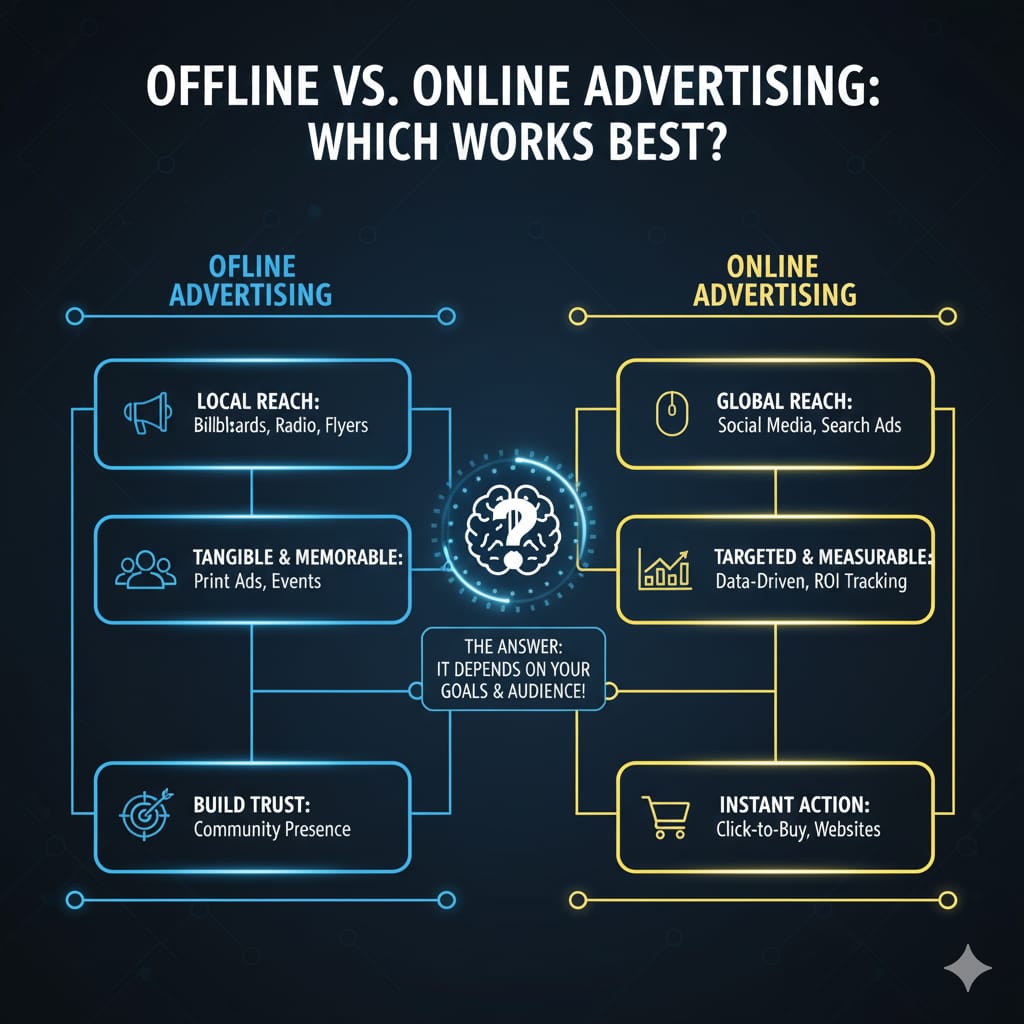
Brands often choose channels based on habit or “what competitors do” rather than objective. The better question is: what is your goal? The answer determines whether offline, online, or a hybrid mix is best.
Who this is for
Marketing managers, small business owners, event promoters, local store owners, and strategists.
A. Core Differences (summary)
| Feature | Online Advertising | Offline Advertising |
|---|---|---|
| Targeting | Highly precise (demographics/behavior) | Broad (location, publication audience) |
| Measurability | High — can track clicks & conversions | Lower — requires indirect measurement |
| Speed | Fast launch & iteration | Slower (production + placement) |
| Cost structure | Scalable (PPC, CPM) | Often high upfront (print, TV, OOH) |
| Creative format | Dynamic, personalized | High-impact, physical presence |
| Best for | Direct response, retargeting, testing | Brand salience, local visibility, prestige |
B. When to use Online Advertising
Immediate response needed: lead gen, e-commerce sales, app installs.
Tight budgets & testing: start with small budgets, iterate quickly.
Precision targeting: niche audiences, retargeting users who have visited your site.
Measurement focus: if you need granular ROI reporting.
Examples: Google Search for high-intent queries; Facebook/Instagram for interest-based targeting; YouTube for storytelling with measurable attention metrics.
C. When to use Offline Advertising
Broad awareness & scale: OOH billboards, TV campaigns for mass reach.
Local footfall & credibility: local paper, radio, outdoor near storefronts.
Event-driven impact: trade shows, activations, product launches.
Prestige & branding: some sectors still value TV and print for prestige.
Examples: A new mall uses billboards + local radio for footfall; a luxury brand uses print and selective OOH to signal premium positioning.
D. Hybrid Strategies (often the best approach)
Top of funnel offline + online retargeting: billboard → retarget viewers with social ads featuring offer.
Event + digital amplification: in-person launch with live streaming + post-event content for lead capture.
QR in offline media: print ad with QR → campaign-specific landing page (easy to track).
Promo codes & vanity URLs: measure offline-driven responses with unique codes/URLs.
E. Measuring Offline Impact
Use unique promo codes in print/radio ads.
Track time-bound sales uplift vs baseline to infer impact.
Run geo-fenced mobile campaigns to target users who saw OOH and measure site visits.
Use surveys and POS questions (“How did you hear about us?”) to gather attribution signals.
F. Cost Comparison & ROI (practical thinking)
Online ad spend is variable and testable — easier for small businesses.
Offline often requires larger minimum spend but can deliver high-impact brand awareness and local credibility.
Consider CPM vs expected conversion: online gives clearer CPA; offline needs complementary measuring tactics.
G. Decision Framework
Define objective: Awareness vs Conversion.
Know your audience: Are they online-heavy or offline-heavy?
Test low-cost online first if uncertain.
Layer offline once online proves the message or for high-visibility boosts.
Always include trackable elements in offline (QR, codes, dedicated pages).
Conclusion
Neither online nor offline is universally “best.” Online is ideal for direct response, precision, and measurability. Offline shines for mass awareness, local footfall, and brand prestige. The smart play is a hybrid approach: use offline to create salience and online to capture intent and measure ROI.
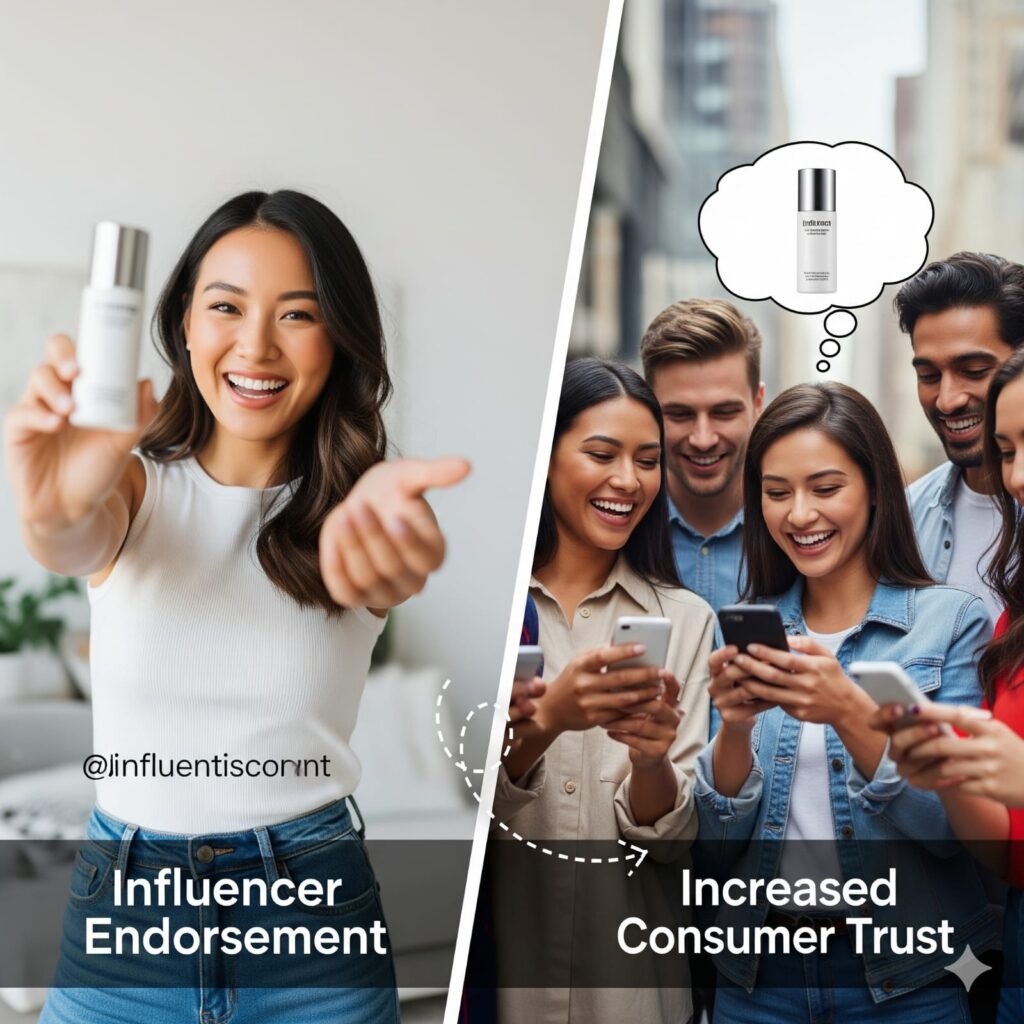
How Influencer Marketing Builds Brand Trust.
Case Context
Influencer marketing evolved from single-post deals to strategic, multi-format partnerships that build trust and drive measurable outcomes — when executed correctly.
Who this is for
D2C brands (beauty, F&B, fashion), lifestyle brands, marketers planning creator campaigns.
A. Why influencers build trust
Relatability: Creators feel like real people. Their endorsement reads as a peer recommendation.
Contextual demonstration: Influencers show products being used in real life — this helps potential customers visualize usage.
Third-party validation: A respected creator’s recommendation acts as social proof beyond brand messaging.
B. Types of influencers & how to use them
Nano (1k–10k followers): Very niche, high engagement — great for local activations / community trust.
Micro (10k–100k): Best balance of reach and authenticity; often the highest ROI per rupee.
Macro (100k–1M): Broad reach, professional content — useful for launches.
Celebrity (1M+): Massive reach & prestige — expensive, used for big campaigns.
C. Campaign structures & models
Gifting / sampling: Good for discovery; risk: less control and mixed quality of posts.
Paid posts: Fixed-fee content with defined deliverables (feed post, story, reel).
Affiliate / performance: Pay per sale or lead via unique links or promo codes.
Long-term ambassadorships: Deep partnership that builds credibility over time — best for trust-building.
D. Best practices to build trust via influencers
Choose alignment over reach: Pick creators whose values and audience match your brand.
Give creative freedom: Influencers know what engages their audience — brief the outcome, not the script.
Use storytelling: Encourage creators to show problem → discovery → solution narrative.
Disclose transparently: #ad increases trust by being honest; ensure compliance with local rules.
Repurpose UGC: With permission, use creator content in ads and product pages — UGC often outperforms branded creative.
Measure the full funnel: Look beyond immediate sales — measure uplift in branded search, engagement, and retention from influencer cohorts.
E. Measurement & KPIs
Top funnel: Reach, impressions, views, engagement rate.
Middle funnel: Clicks, site visits, time on page.
Bottom funnel: Promo-code redemptions, tracked sales, CAC from influencer cohorts.
Long-term: Repeat purchase rate and LTV of customers acquired via influencer campaigns.
F. Example campaign (mini case)
Brand: Natural skincare startup
Strategy: 8 micro-influencers (15k–45k) post Reels + 2 Stories each with a unique 10% code.
Result: 1,100 code redemptions in 30 days, average order value + 15%, 2.5x ROI on influencer spend, and 20% of buyers repeated order within 60 days.
G. Pitfalls to avoid
Choosing influencers by follower count alone.
Over-directing creative, killing authenticity.
Not tracking with unique links/codes.
One-off campaigns expecting long-term trust from a single post.
Conclusion
Influencer marketing builds trust by combining relatability, contextual proof, and repeat exposure. Micro and nano influencers often deliver the best mix of authenticity and ROI. Focus on alignment, creative freedom, measurable outcomes, and longer-term partnerships to turn influencer exposure into lasting brand trust and revenue.