Unlock your brand’s online potential with smart, data-driven digital strategies.
From SEO to paid ads — we help you grow faster, smarter, and stronger.
Blog title
What is digital marketing?
Why is important digital marketing?
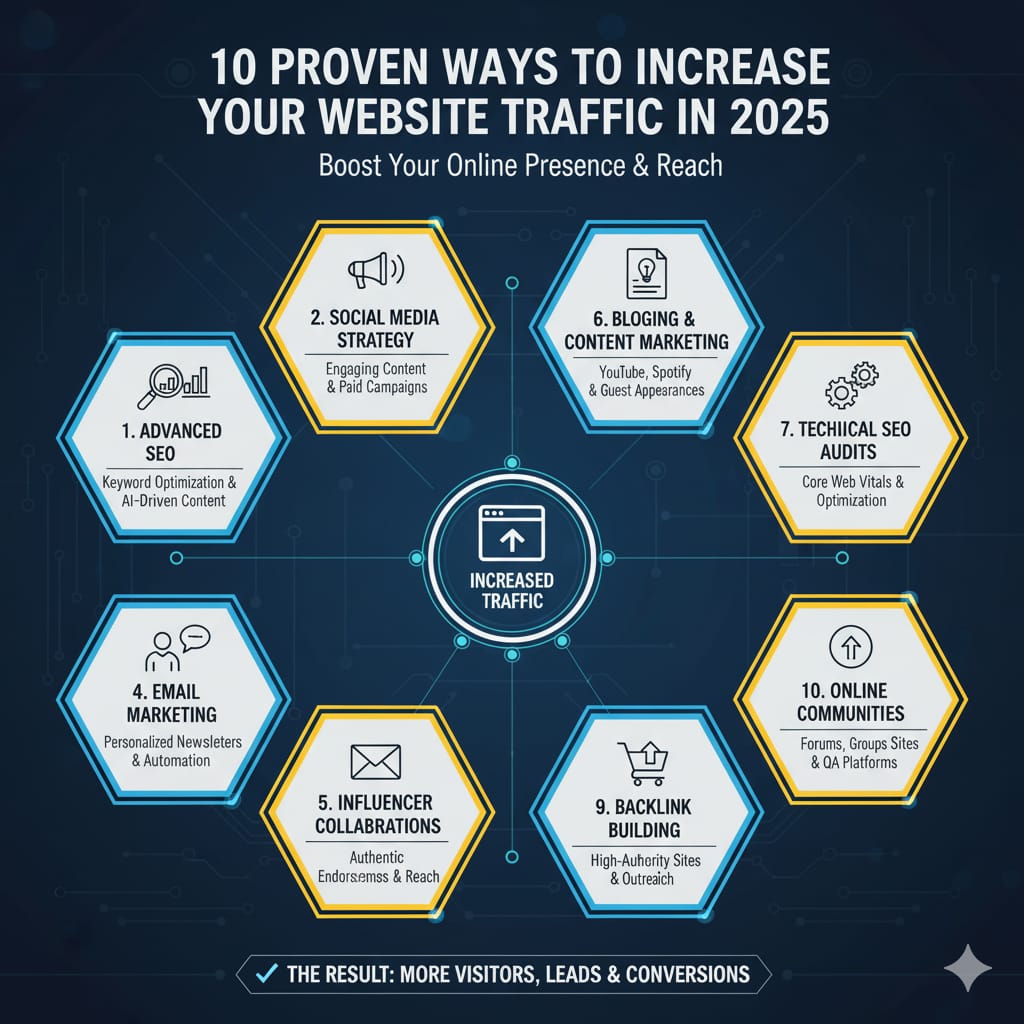
10 proven ways to increase your website traffic in 2025.
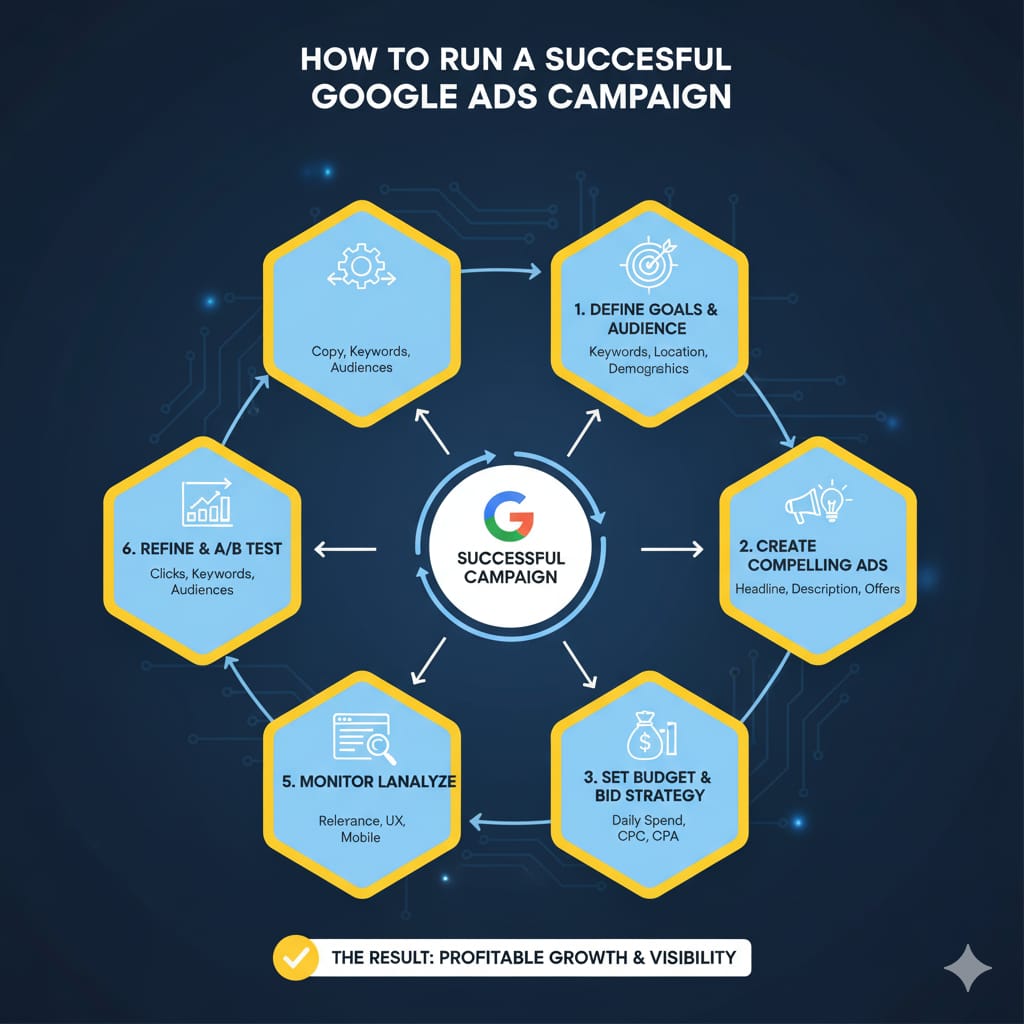
How to run a successful google ads campaign.
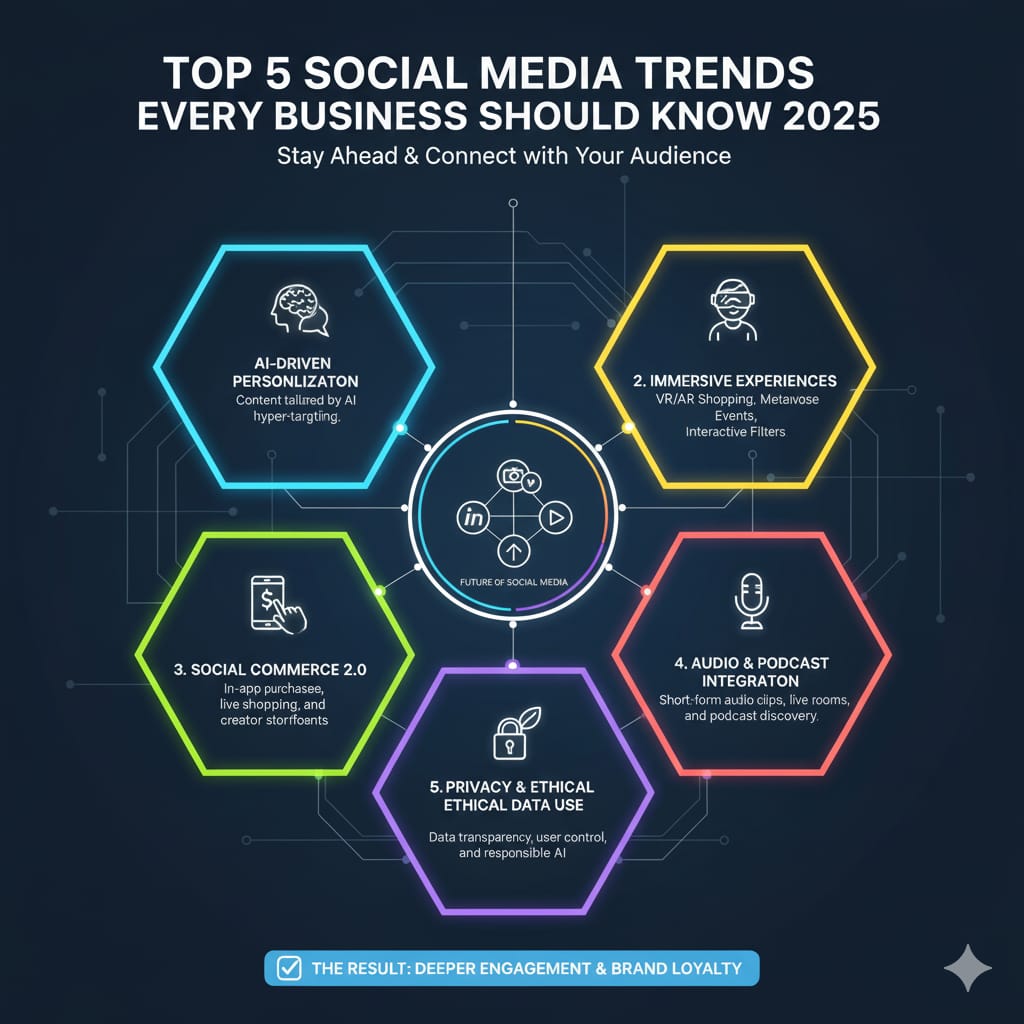
Top 5 social media Trend every business should know.
In 2025, just having a website isn’t enough — you need consistent, high-quality traffic.
With Google’s evolving algorithms, AI search tools, and voice queries, growing traffic now means combining smart SEO, valuable content, and engaging design.
Digital marketing is the process of promoting products or services using online platforms like social media, search engines, email, and websites to reach and engage target audiences effectively.
.
Why is important digital marketing?In future
Digital marketing is important for the future because the world is becoming more online every day. Businesses need to connect with customers where they spend most of their time — on the internet.
It helps brands reach a global audience, track performance in real-time, and use AI tools for smarter targeting. In the future, as e-commerce, voice search, and AI continue to grow, digital marketing will be the key to business visibility, customer trust, and long-term success.
1. Optimize for Voice Search
More people use Siri, Alexa, and Google Assistant to find information.
Use conversational keywords and FAQs like “How can I…” or “Best ways to…” to rank for voice queries.
Example: Instead of “Digital marketing strategies,” use “What are the best digital marketing strategies in 2025?”
2. Create High-Value, Long-Form Content
Google prioritizes content that is useful and detailed.
Write blog posts between 1,500–2,000 words that solve real user problems.
Example: Instead of “SEO basics,” write “A 2025 Guide to AI-Powered SEO for Small Businesses.”
3. Leverage Video Marketing
Short videos and YouTube tutorials increase user time on site.
Embed explainer or testimonial videos on your web pages — it boosts engagement and conversion.
4. Use Social Media Promotion
Share every blog or service page update on Instagram, LinkedIn, and Facebook.
Add catchy hooks, hashtags, and CTAs linking back to your site.
5. Improve Website Speed & Mobile Optimization
Fast, mobile-friendly websites rank higher.
Use Google PageSpeed Insights to identify issues and compress images or fix slow-loading pages.
6. Use Internal Linking
Connect your blog posts and service pages logically.
Example: From a “Google Ads Guide,” link to “SEO Services” or “Contact Us.”
This helps both SEO and user navigation.
7. Focus on Backlinks
Earn backlinks from trusted websites.
Guest blogging, PR articles, and partnerships can help build authority and domain trust.
8. Update Old Content
Outdated pages lose rank over time.
Add new statistics, improve visuals, and refresh meta tags every 6 months to stay relevant.
9. Use Email Marketing
Send newsletters with “Read More” links to your latest blogs or case studies — this drives repeat visitors.
10. Track & Analyze Performance
Use Google Analytics 4 and Search Console to identify which content brings the most visitors, and double down on what works.
Introduction
Google Ads remains one of the most effective ways to reach potential customers instantly.
But without the right strategy, you can waste your budget.
Here’s a step-by-step guide to creating high-performing campaigns.
1. Define Your Objective
Start with clear goals:
Generate leads
Drive sales
Boost website visits
Your campaign type (Search, Display, Video, Shopping) depends on this objective.
2. Choose the Right Keywords
Use tools like Google Keyword Planner or Ubersuggest to find high-intent, low-competition keywords.
Focus on buyer intent terms like “best digital marketing agency near me” instead of just “marketing.”
3. Create Compelling Ad Copy
Your headline should grab attention, and the description should solve a problem.
Example:
Headline: “Boost Your Brand with Expert Google Ads”
Description: “Get more clicks and conversions. Tailored campaigns for your business.”
4. Optimize Your Landing Page
When users click your ad, they should land on a fast, relevant, and mobile-friendly page.
Include a clear CTA like “Get a Free Consultation” or “Download Now.”
5. Set a Smart Budget
Start small (₹500–₹1,000/day).
Monitor results for a week and gradually scale up campaigns that convert best.
6. Use Ad Extensions
Extensions improve visibility and click rates. Add:
Call extension (adds phone number)
Sitelinks (extra links below your ad)
Location extension (helps with local SEO)
7. A/B Test Ads
Run two ad variations with different headlines or CTAs.
Pause the one with lower performance and improve the winner.
8. Monitor with Google Analytics
Track conversions, bounce rates, and which keywords drive sales.
Integrate GA4 + Google Ads for complete visibility.
9. Optimize for Quality Score
Google rewards ads with high relevance and click-through rate (CTR).
Better Quality Score = lower cost per click (CPC).
10. Retarget Lost Visitors
Use Display Remarketing to show ads to users who visited your site but didn’t convert.
This keeps your brand top of mind.
Introduction
Social media evolves every few months.
To stay relevant in 2025, brands need to adapt to new technologies, AI, and content formats that keep audiences engaged.
1. Short-Form Video Dominates
Reels, YouTube Shorts, and TikToks are the most consumed content formats.
Businesses should use quick, value-packed videos with captions and trending audio.
2. AI-Powered Content Creation
AI tools like ChatGPT, Canva Magic Write, and Synthesia make content creation faster.
Brands now use AI to generate captions, ideas, and even product demos — but always with a human touch.
3. Social Commerce on the Rise
Instagram Shops and TikTok Shop allow users to buy directly without leaving the app.
Integrate your products into shoppable posts and stories for instant conversions.
4. Authenticity Over Perfection
Audiences prefer real, unfiltered content — behind-the-scenes, employee videos, or user-generated content (UGC).
It builds stronger trust and connection than overly polished posts.
5. Community-Driven Marketing
Private groups and online communities are growing fast.
Brands that create value-based spaces (like Discord or Facebook groups) build loyalty and advocacy.